
Screen Rooms & Patio Enclosures
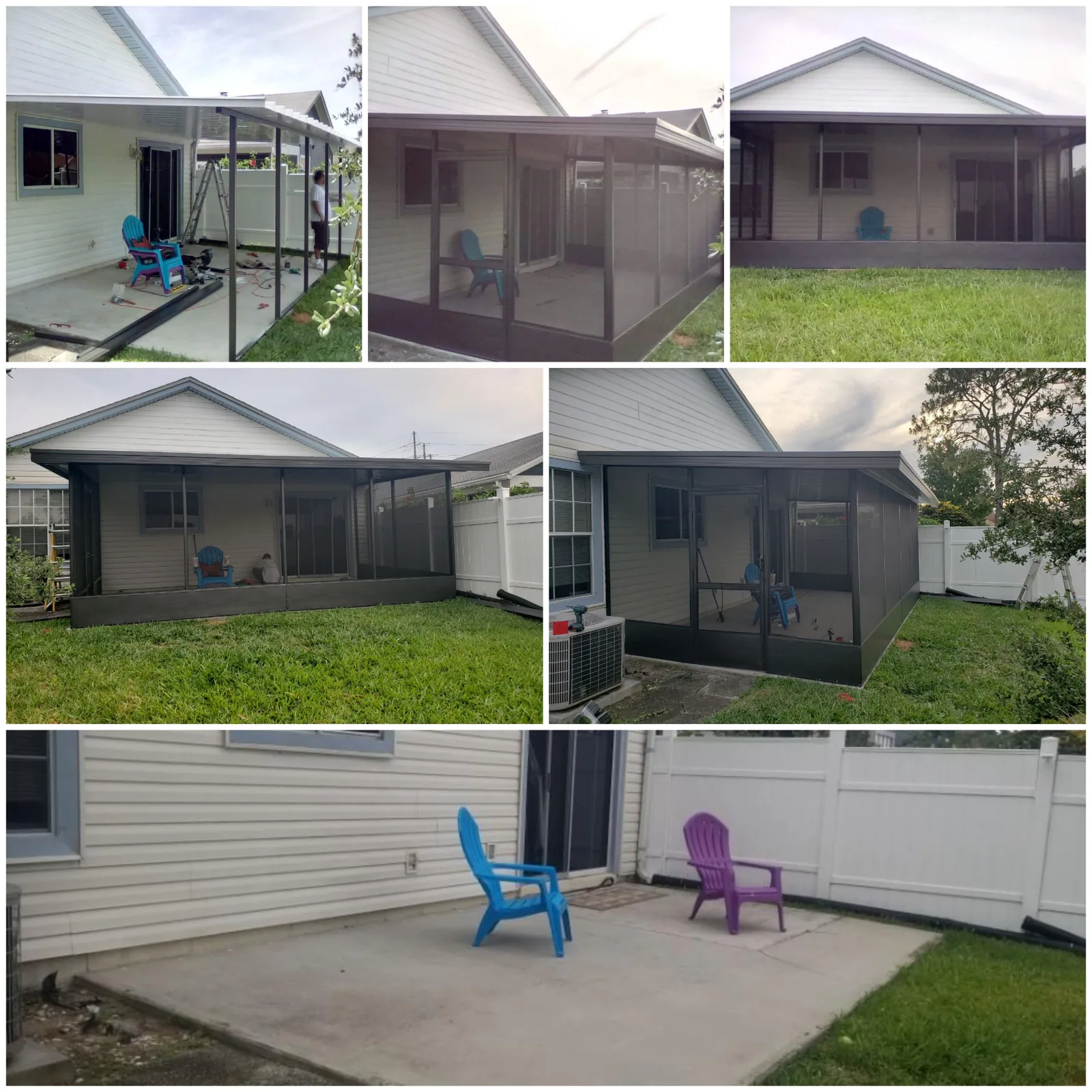
Patio Screen Enclosure Build: Before and After
A patio screen enclosure from framing through to the finished space.
See the Patio Screen Enclosure Build: Before and After photosLicensed and insured · Owner-operated since 2013 · Open 24 hours
Call 407-802-7087Volusia County
Rescreening, repairs and new enclosures for Port Orange homes and managed properties.
Port Orange stretches from the Halifax River toward inland residential neighborhoods in Volusia County. That setting gives homeowners different reasons to maintain a pool cage. A river-facing property may have more exposure to wind-driven rain and salt carried inland, while a shaded backyard may collect leaves and small branches. Homes around established residential streets often have mature landscaping close to the pool deck. Other properties have open yards with less shelter around the enclosure. Sunstate Screening approaches these differences by looking at the actual structure, its surroundings, and the condition of its components. The useful starting point is not simply the age of the screen. It is whether the mesh, aluminum members, connections, and doors still work together as intended. That inspection helps separate a straightforward screening job from repairs that need attention before new material goes in.
The housing mix includes single-family homes in planned communities such as Waters Edge and Cypress Head, along with older homes closer to the river and the Dunlawton Avenue corridor. A backyard pool cage on a larger lot presents different access needs from a compact patio enclosure beside neighboring homes. Rooflines, fence openings, landscaping, and deck furniture can also affect how the work area is reached. Before pool cage rescreening, it helps to identify which sides of the structure are accessible from the ground and which panels sit above the pool. Homeowners should also point out irrigation equipment, outdoor electrical fixtures, and plants they want protected. Where an association governs exterior appearance, replacement mesh and visible aluminum changes should be checked against its current documents. Being in a named neighborhood alone does not establish what approval a particular property requires.
Dunlawton Sugar Mill Gardens and the Spruce Creek area reflect the wooded landscape found around parts of Port Orange. Trees can make a backyard comfortable, but overhanging limbs also create maintenance concerns for screens. Leaves may settle against roof panels, twigs can snag mesh, and falling branches can damage more than the fabric. Damp debris left against a screen can encourage surface buildup and make small defects harder to see. A torn roof panel therefore deserves a look at the nearby frame and attachment points, not just a replacement patch. Pool cage repair may involve an isolated panel, loose spline, or a damaged door component when the surrounding structure remains serviceable. If several panels are brittle or pulling loose, replacing them individually may leave other weak areas untouched. The condition across the cage should guide that decision.
Port Orange experiences humid summers, heavy thunderstorms, and potential tropical weather. Properties near the Halifax River have a different immediate setting from homes farther inland, but neither location makes an enclosure immune to storm damage. Wind can push loose furniture or yard debris into screening, and an impact can distort an aluminum member without tearing every adjacent panel. After severe weather, look from a safe location for leaning posts, separated connections, hanging metal, and doors that no longer line up. Do not enter an enclosure that appears unstable or climb onto its roof to examine damage. Storm damage repair should begin with the condition of the supporting structure. Aluminum frame repair may be needed before rescreening makes sense, and a visibly displaced frame should not be treated as a cosmetic screen problem.
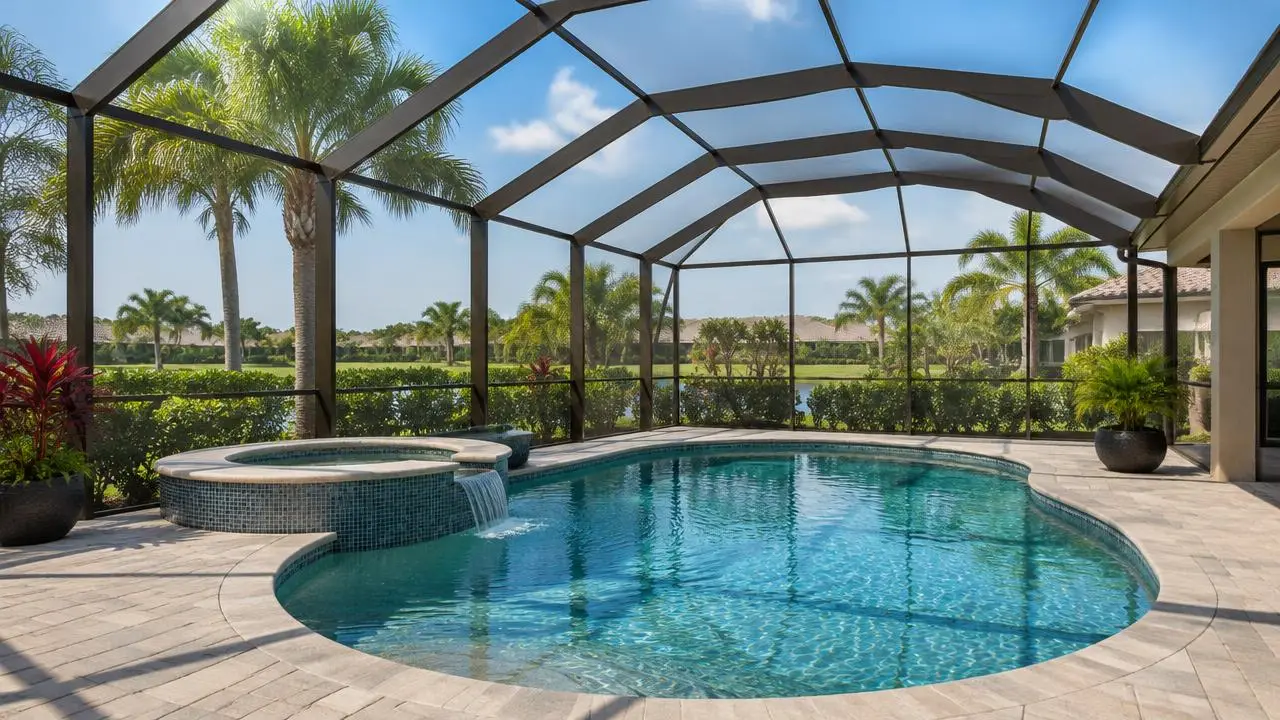
Pool cage rescreening is most relevant when the existing frame can remain in use but the mesh has deteriorated across multiple sections. Strong sun, repeated wetting, and ordinary wear can leave screening faded, fragile, or loose at the edges. A complete pool enclosure assessment should also include door fit, lower panels, and the channels that hold the screen in place. Around river-influenced locations, visible corrosion or deteriorated hardware deserves particular attention rather than being covered by new material. Screen selection should reflect how the household uses the space. Insect resistance, outward visibility, airflow, and resistance to routine contact are different priorities, and no single mesh solves every issue. Denser screening also changes how an enclosure interacts with wind. Material changes should be evaluated for compatibility with the existing cage instead of chosen solely from a sample.
Not every Port Orange outdoor project involves a swimming pool. A covered porch may need screening so it can be used for meals without as many insects, while a rear lanai may need replacement panels and a door that closes properly. Screen rooms and patio enclosures should be planned around the existing roof, slab, drainage, and connection to the house. Screening does not turn an open-air space into a waterproof room, so wind-driven rain remains part of the discussion. For a new pool cage installation, the available deck area, roof geometry, entry locations, and required approvals need attention before dimensions are finalized. Screen doors deserve the same practical planning. Their placement should allow easy movement between the yard and patio without blocking steps, pool equipment access, or the route used to move larger outdoor items.
For a Port Orange inquiry, send photographs of the entire enclosure and closer views of the problem areas. Include the roof shape, doors, and any obvious damage to posts or horizontal members. Mention whether the property is near the river, heavily shaded, or exposed on an open lot, since those details help explain what the photographs may not show. Sunstate Screening is an owner-operated company based in Orlando, led by Bojan Markovic, licensed and insured, and established in 2013. The company replies within one business day. An initial conversation can help identify whether the next step is a rescreening assessment, a structural repair review, or planning for a different outdoor space. The final scope should follow the actual condition of the property, not an assumption that every Port Orange pool cage needs the same service.
Services
Complete rescreening for pool cages when worn or torn mesh needs more than a few panel repairs.
Targeted repairs for damaged pool cage screen panels, doors and visible enclosure problems.
Assessment and repair planning for storm-damaged pool cages, screens and enclosure components.
Repair and replacement work for damaged aluminum pool cage and screen enclosure framing.
New pool cage and pool enclosure installation for Central Florida homes.
Screen rooms and patio enclosures that turn covered outdoor areas into screened living spaces.
Screening for front porches, back porches and lanais, with layouts fitted to the existing space.
Screen door installation and repair for pool cages, patios, porches and lanais.
Recent work
Photos from Sunstate Screening projects in Central Florida.
Screen Rooms & Patio Enclosures
A patio screen enclosure from framing through to the finished space.
See the Patio Screen Enclosure Build: Before and After photos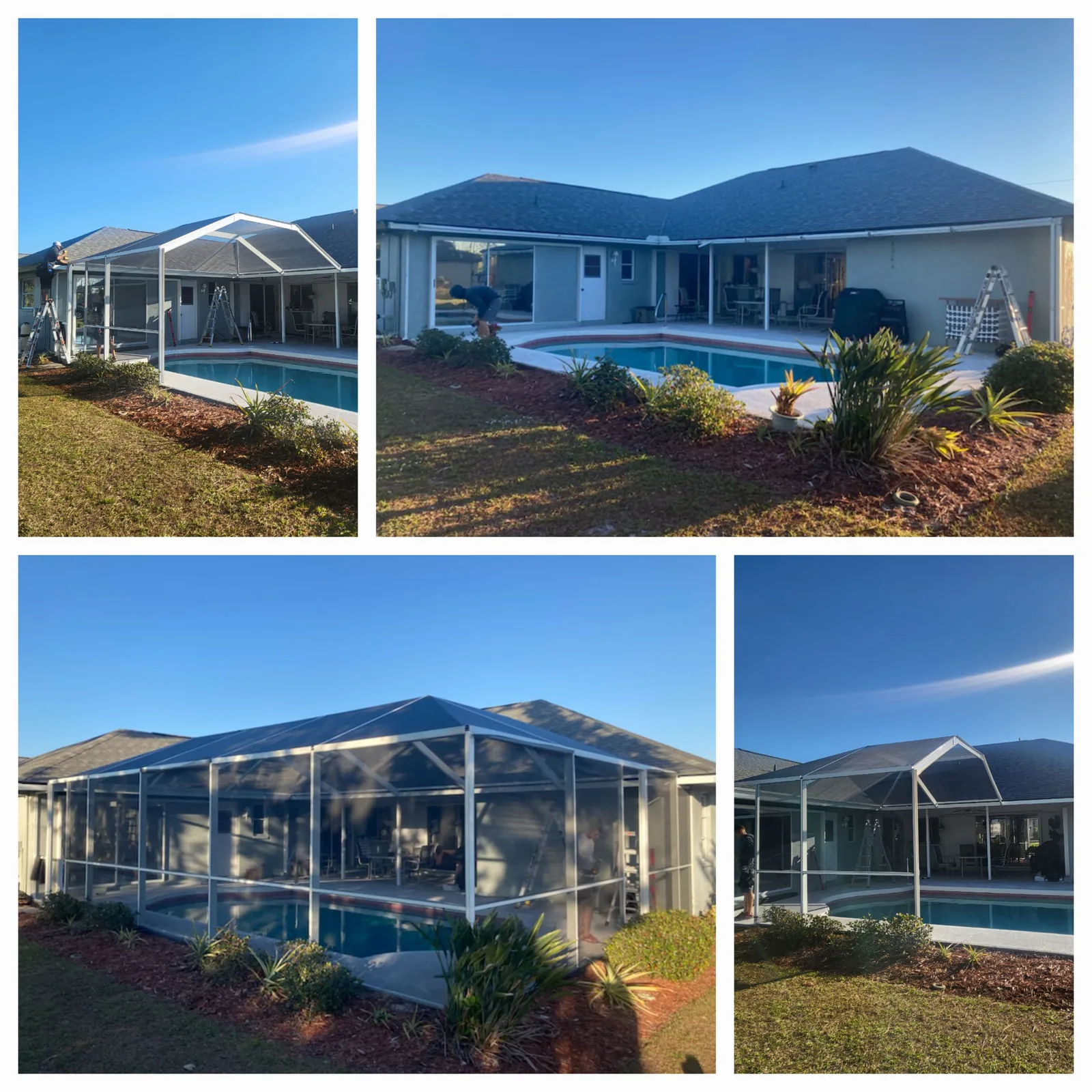
Pool Cage Installation
A pool cage under construction and the completed enclosure.
See the New Pool Cage Construction: Before and After photos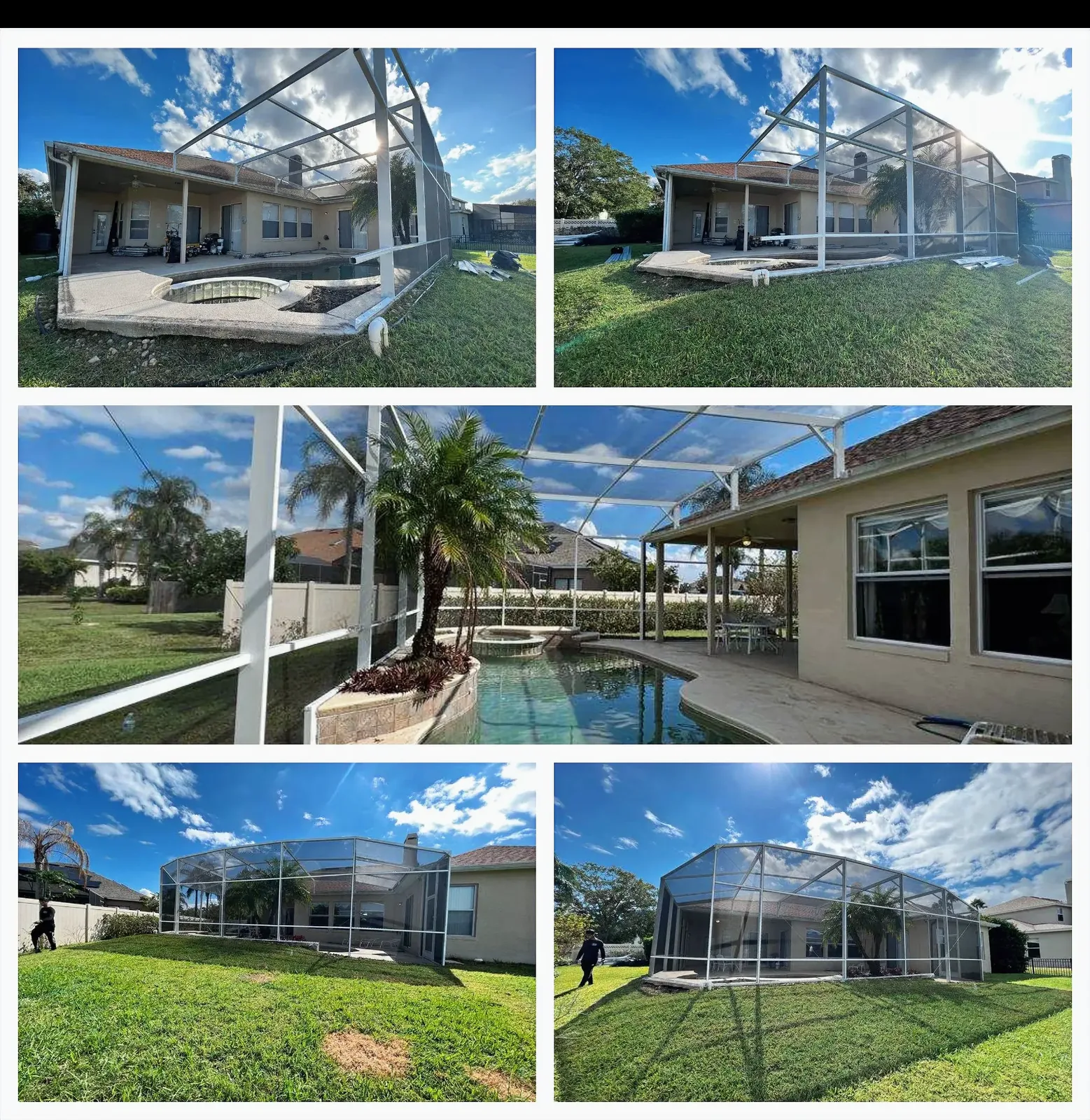
Pool Cage Installation
Pool cage installation in progress and the finished enclosure.
See the Pool Cage Installation Progress: Before and After photosQuestions
Free estimate
We reply within one business day.
Serving Port Orange and the surrounding area from 12924 Maine Woods Ct, Orlando, FL 32824.