Screen Rooms & Patio Enclosures
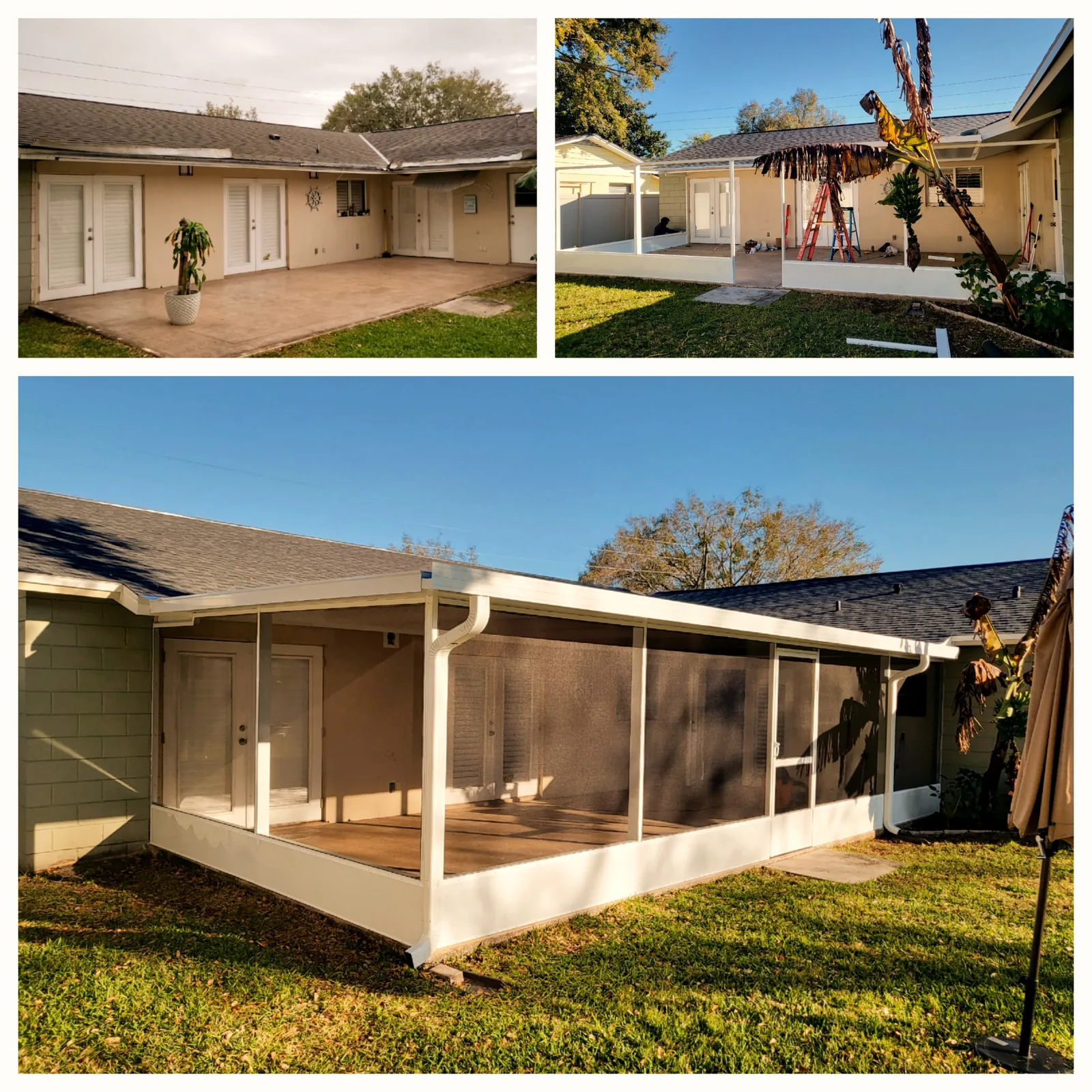
Patio Screening Transformation: Before and After
A patio before work began, during construction and once screened.
See the Patio Screening Transformation: Before and After photosLicensed and insured · Owner-operated since 2013 · Open 24 hours
Call 407-802-7087Volusia County
Rescreening, repairs and new enclosures for Daytona Beach homes and managed properties.
Daytona Beach has residential settings on both the Atlantic side of the Halifax River and the mainland side of the city. For a pool cage, that distinction matters more than a general description of coastal living. A beachside yard may receive frequent salt-bearing air and have limited separation from neighboring buildings. A mainland property may sit beside trees, a golf course, or a subdivision pond. Both settings are within Volusia County, but the exposure and access conditions can differ substantially. Sunstate Screening evaluates the enclosure in relation to its own site rather than assuming all Daytona Beach homes face identical conditions. Screen condition is one part of that review. Frame alignment, connection points, hardware deterioration, and the way doors operate help determine whether the project calls for rescreening, targeted repairs, or a closer structural assessment.
Daytona Beach includes older single-family houses, newer subdivision homes, townhomes, and condominium properties. Mainland communities such as Pelican Bay and the LPGA area offer a different residential layout from the streets near the oceanfront. Some homes have broad pool decks with room around the cage, while others have narrow side yards or closely spaced buildings. These differences affect access to elevated panels and the practical arrangement of repair work. A condominium patio also raises ownership questions that do not necessarily apply to a detached house. The owner should establish who controls the enclosure and who can authorize changes before work is arranged. Existing roof connections and shared building components need careful consideration. A screen enclosure assessment should be specific to the property type, rather than treating a private pool cage and a shared-building balcony as interchangeable projects.
Salt exposure is a relevant concern around Daytona Beach, especially closer to the Atlantic and Halifax River. Aluminum does not develop the same red rust as steel, but that does not make an assembled pool enclosure immune to corrosion or deteriorating connections. Fasteners, dissimilar-metal contact points, and areas where moisture lingers can all warrant attention. White surface deposits, damaged finishes, loose connections, or staining around hardware should be examined rather than hidden behind fresh screening. Aluminum frame repair may be appropriate when a component is damaged and a suitable repair can be established. Other conditions may require a broader review of the structure. New mesh cannot restore a weakened attachment or correct a leaning post. For that reason, replacing the screens should follow an assessment of the supporting cage, particularly when visible deterioration extends beyond a single panel.
The Atlantic setting also makes storm preparation and post-storm inspection important topics. Daytona Beach can experience tropical systems, strong thunderstorm gusts, and wind-driven rain. Even a property away from the ocean can sustain damage from airborne yard objects or falling limbs. After a storm, a screen door that suddenly drags may indicate a hinge problem, but it can also be a reason to check surrounding alignment. Look for torn roof sections, separated joints, and pieces that appear out of position without walking beneath questionable framing. Storm damage repair should distinguish fabric loss from damage to the load-bearing structure. No screen choice makes a cage hurricane-proof, and a replacement panel should never be described as a substitute for sound framing. If metal is hanging or the enclosure has shifted, keep people away until its condition can be assessed.
Pool cage rescreening fits a different situation: a usable frame with widespread mesh wear. In sunny Daytona Beach yards, older fabric may become brittle, develop small splits, or pull away along the perimeter. Replacing one failed section can be reasonable when neighboring panels remain sound. When deterioration is distributed across the roof and walls, a fuller rescreening scope may provide a more consistent result. The decision should include the condition of spline channels and the suitability of the proposed material. A homeowner seeking better insect protection may favor a different mesh from someone who puts the greatest value on the view across an open yard. Those choices have airflow and wind-loading implications. Ask how the selected screen works with the existing structure instead of assuming the tightest weave or darkest appearance is automatically the best option.
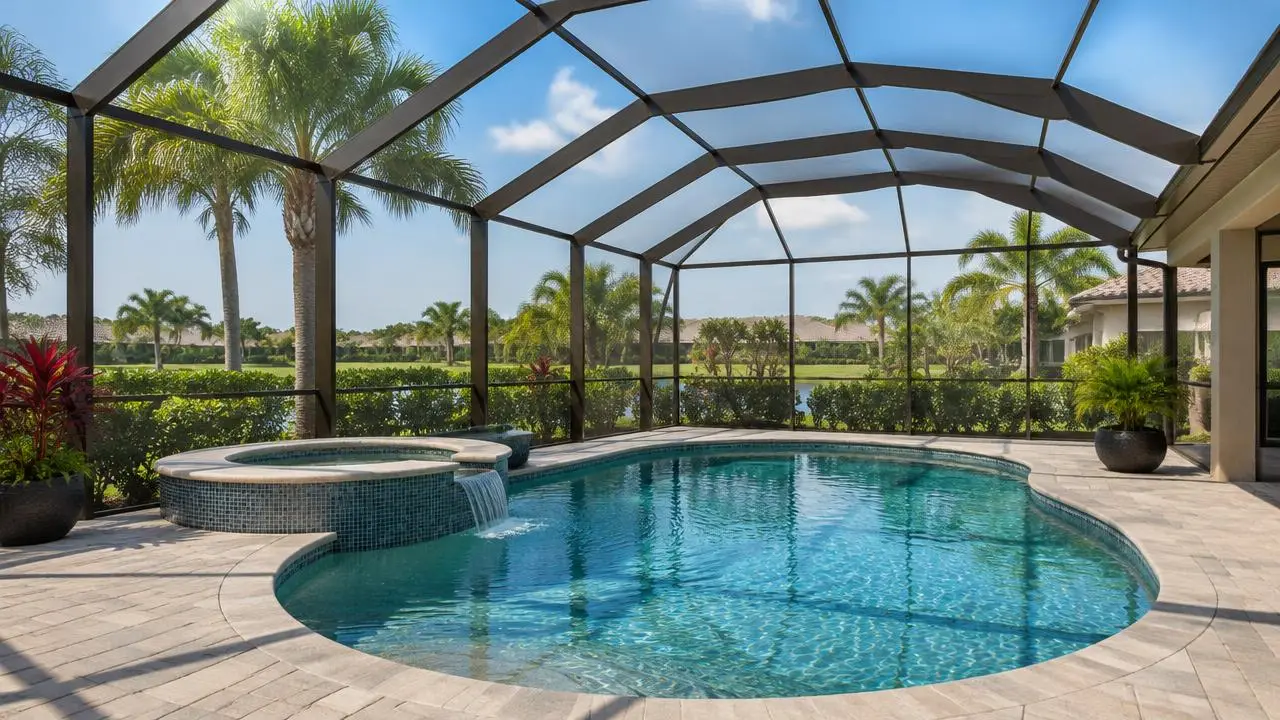
A pool cage installation in Daytona Beach starts with the property layout and applicable design requirements, not simply a preferred roof style. The deck footprint, house attachment, nearby structures, and exposure all need review. Requirements can vary with the exact address and project scope, so the permitting authority should be identified before construction plans are settled. For homes without pools, screen rooms and patio enclosures can provide a defined outdoor seating area while retaining natural ventilation. Porch and lanai screening may be a smaller option when a suitable covered space already exists. Screen doors should accommodate daily travel to the yard and close without a persistent perimeter gap. None of these spaces should be represented as sealed against rain, salt, or all insects. They remain outdoor enclosures whose performance depends on their design, installation, and ongoing condition.
When requesting help in Daytona Beach, identify whether the home is beachside or mainland and explain what changed. A screen that failed gradually suggests a different starting point from a cage struck by debris during a storm. Wide photographs help show the structure, while close views can document a torn edge, damaged fastener area, or door gap. Do not climb onto the cage or remove unstable parts to obtain pictures. Sunstate Screening has operated since 2013 and is owned by Bojan Markovic. The Orlando-based business is licensed and insured and responds within one business day. Discussing the address, ownership authorization, and visible damage first helps establish a sensible next step. The aim is to define the repair or installation around the actual Daytona Beach property rather than make a broad promise based on its coastal location.
Services
Complete rescreening for pool cages when worn or torn mesh needs more than a few panel repairs.
Targeted repairs for damaged pool cage screen panels, doors and visible enclosure problems.
Assessment and repair planning for storm-damaged pool cages, screens and enclosure components.
Repair and replacement work for damaged aluminum pool cage and screen enclosure framing.
New pool cage and pool enclosure installation for Central Florida homes.
Screen rooms and patio enclosures that turn covered outdoor areas into screened living spaces.
Screening for front porches, back porches and lanais, with layouts fitted to the existing space.
Screen door installation and repair for pool cages, patios, porches and lanais.
Recent work
Photos from Sunstate Screening projects in Central Florida.
Screen Rooms & Patio Enclosures
A patio before work began, during construction and once screened.
See the Patio Screening Transformation: Before and After photos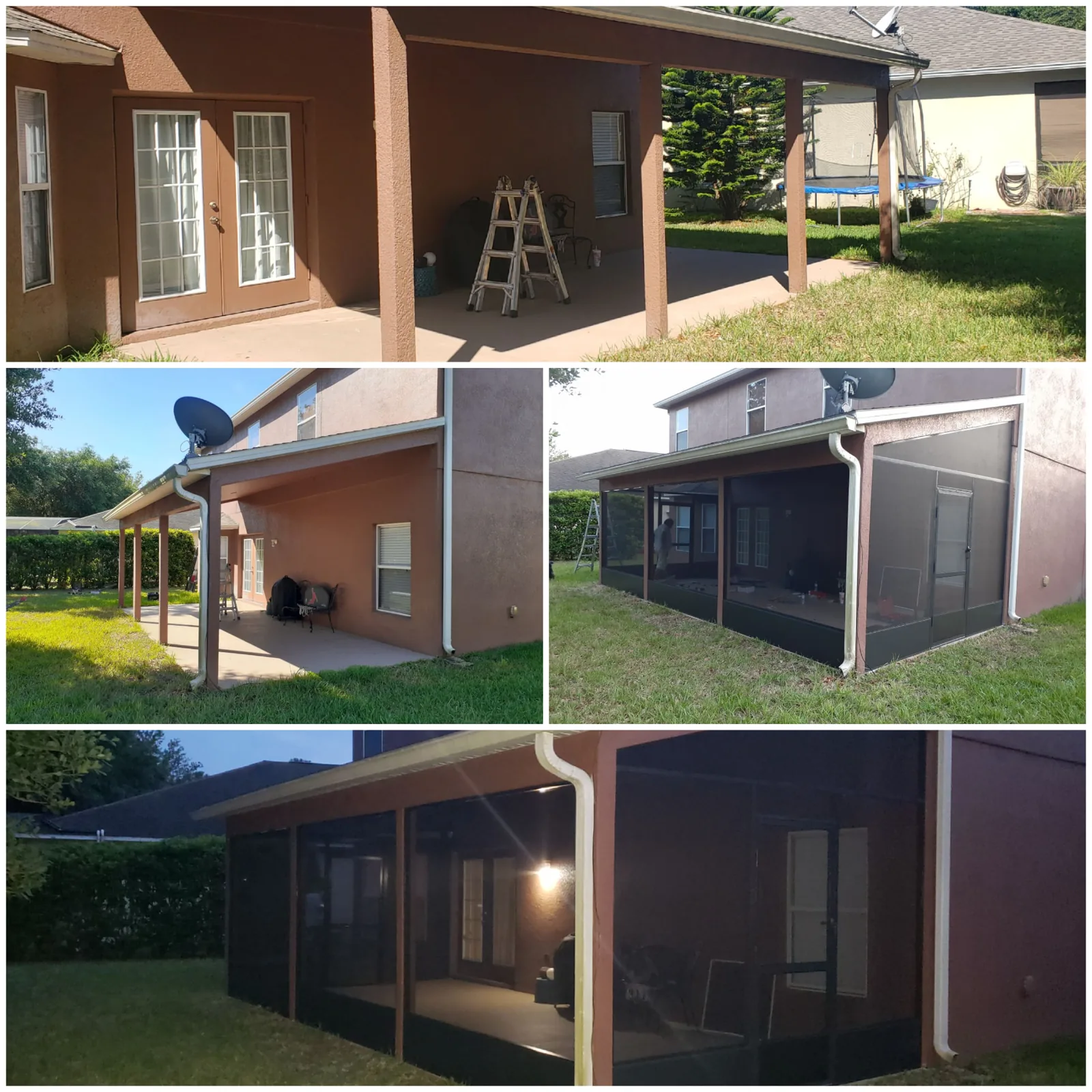
Porch & Lanai Screening
An open porch turned into a screened enclosure.
See the Open Porch to Screened Enclosure Conversion photos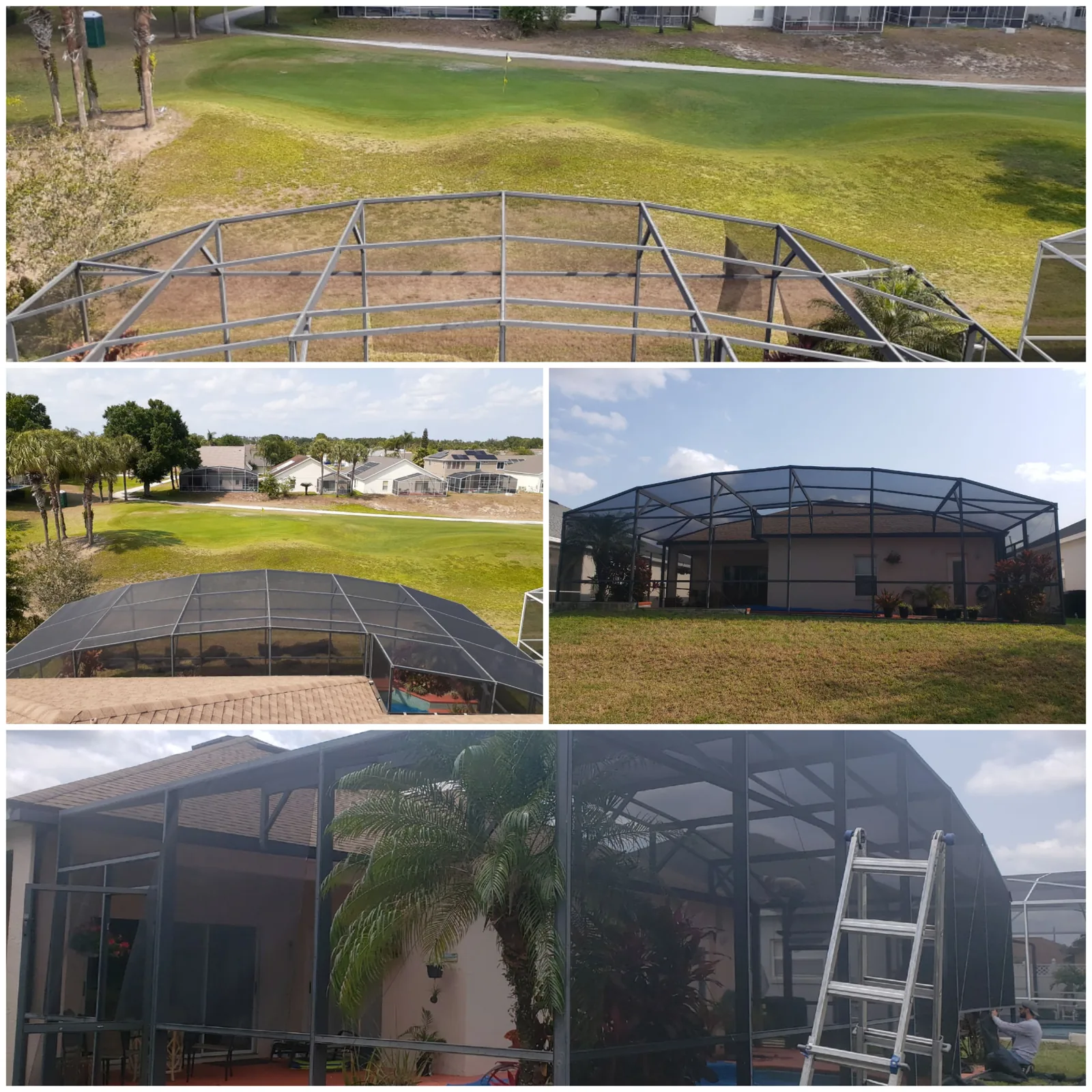
Pool Cage Installation
A pool cage pictured at several stages of the build.
See the Pool Cage Build Stages: Before and After photosQuestions
Free estimate
We reply within one business day.
Serving Daytona Beach and the surrounding area from 12924 Maine Woods Ct, Orlando, FL 32824.